
How we verify a reference
- Reference and machine — the part number or tag text, plus the machine make, model and serial number. The serial matters because a part number can change between production runs.
- Decode — we work out the hose construction, size, fittings at each end, overall length and twist angle that the reference describes.
- Cross-check — where possible, we compare against a photo or measurement of the old hose. A hose fitted in the field may not match the original reference.
- Confirm in writing — the quotation states the build we will make, so your team can check it before ordering.
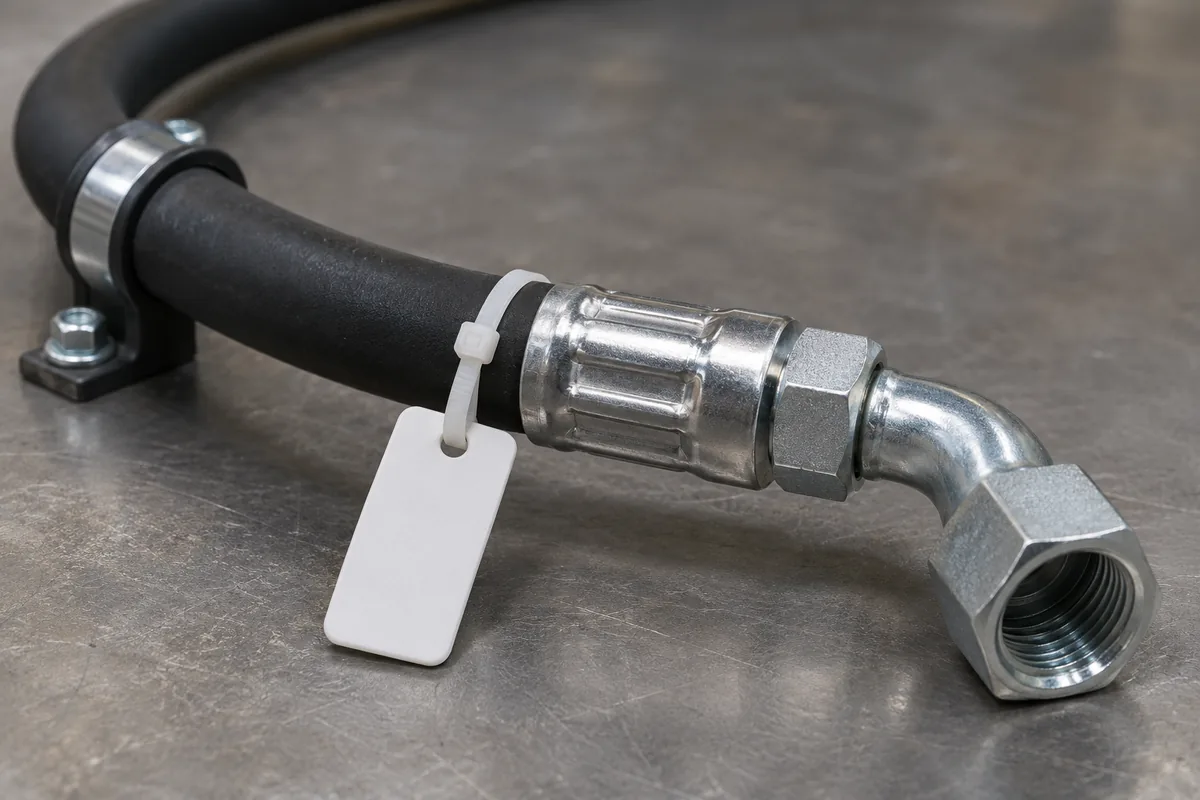
- Tag — the assembly carries an RHPL traceable tag; your stores can record both references side by side.
We never publish machine-to-part-number lists. References you send are used to quote your enquiry.
Machine references you can send
You can send part numbers and tags from machines such as Caterpillar, Komatsu, Liebherr, Hitachi, Volvo, Sandvik, Epiroc, SANY, XCMG, Shantui, LiuGong and SDLG. Each make has its own way of coding hoses: some references describe the complete assembly, others only the bulk hose, and some include the protective sleeve. That is why we decode before we quote.
References from second-hand and transferred fleets
If you acquire a used machine, it may carry original hoses, earlier replacements and field-made repairs. A reported change in mining contractors does not itself establish a transfer of machine ownership. Where equipment does change hands, check for these gaps: - A part number from the parts book may not match the hose actually fitted. - Old tags may be from several different suppliers. - Positions may have been re-routed after damage.
For transferred machines we recommend sending both the reference and photos of the fitted hose. Where they disagree, we raise the question before quoting rather than building to the wrong one. For a full machine, a position-wise kit is often simpler than chasing references one by one.
Equipment positions covered
- Haul-truck hoist, steering and brake-cooling hoses
- Excavator boom, stick, bucket and swivel hoses
- Loader articulation and lift hoses
- Drill-rig feed, rotation and mast hoses (drill-rig kits)
- Underground loader and jumbo hoses (underground kits)
Recording both references
Once a reference is confirmed, we suggest your stores record three things side by side: the OEM reference, the RHPL tag reference and the machine position. If your stores hold hoses from several sources for one machine, a cross-record helps the fitter distinguish them. It also makes later re-orders faster, because the RHPL tag describes the exact build we made.
Questions before an enquiry
Useful answers.
Can you quote from a part number alone?
Often yes, but we ask for the machine serial number and, where possible, a photo of the old hose. That avoids building to a reference that no longer matches the hose fitted on your machine.
Are your assemblies genuine OEM parts?
No. They are aftermarket assemblies built to the confirmed reference. No OEM approval is claimed.
Will you share a cross-reference list for my fleet?
We do not publish machine-to-part-number lists. Your kit list records positions and RHPL tag references so that re-ordering is simple.
Can a mine in Ghana order by part number directly?
Mining companies should check the current Minerals Commission procurement list, which covers hoses and fittings. We quote Ghana-incorporated suppliers. Contractors and plants can enquire directly where applicable procurement rules permit.
You supply Ghana's mines