From ship to bag: where the hoses are
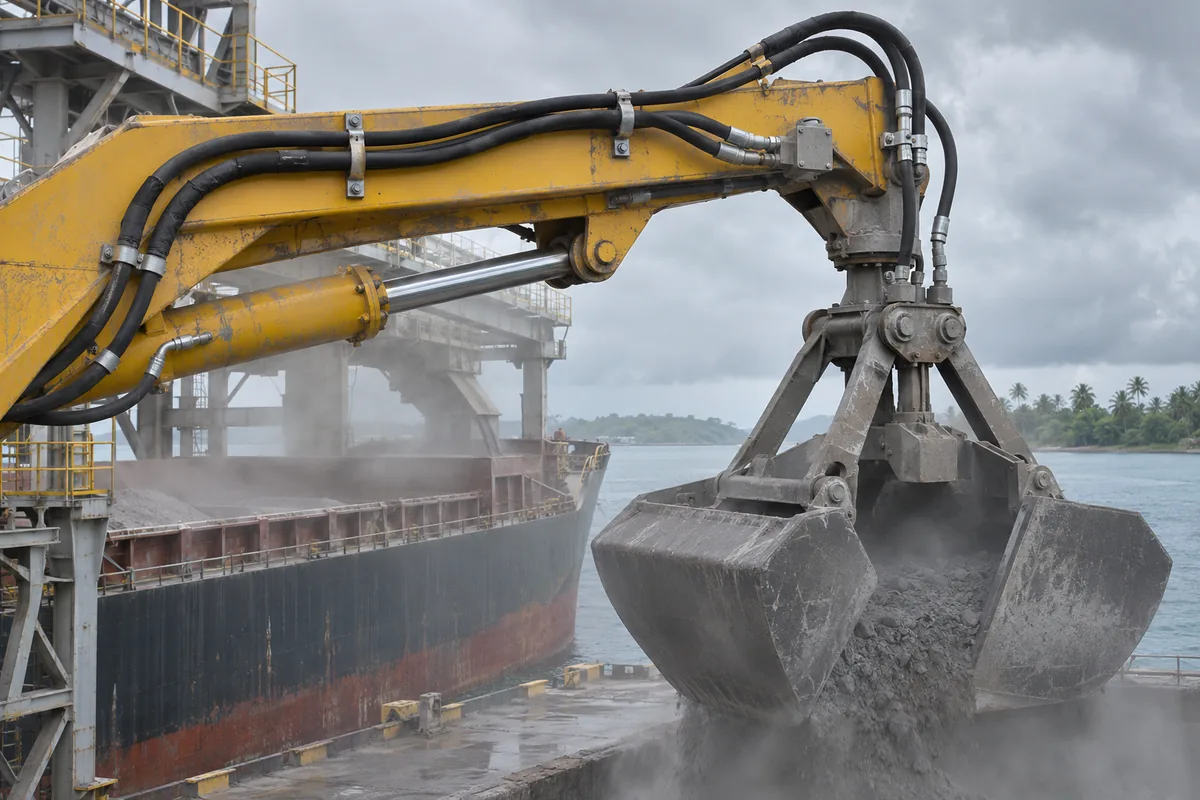
1. Clinker ship unloading. Clinker arrives by sea and is discharged by ship unloaders or grab cranes into hoppers and onto conveyors. See the section below.
2. Clinker storage and reclaim. Hydraulic gates under hoppers and silos, reclaim equipment, and mobile loaders on open stockpiles.
3. Grinding. Ball mills and vertical roller mills, and roller presses where fitted. Hoses serve mill lubrication systems, hydraulic tensioning or grinding-pressure cylinders, and power units. Leaks here mean oil on hot surfaces and contaminated lubrication, so both pressure and temperature ratings matter.
4. Calcined-clay and additive handling. Where clay or other additives are dried and dosed, hoses serve dampers, gates and feeders, often in hot and dusty air.
5. Packing and loading. Rotary packers, bag-applicators, truck loaders and bulk tanker loading spouts use small hydraulic and pneumatic cylinders that cycle all day. Check flexing, dust exposure and pressure together when selecting those hoses.
6. Mobile plant. Wheel loaders, forklifts and sweepers around the site.
Clinker ship-unloader hydraulics at coastal terminals
Ship unloaders and grab cranes at a coastal cement terminal combine three of the hardest duties for hoses: high-cycle movement, abrasive dust and salt air. - Slewing, luffing and boom cylinders. Hoses move through wide arcs on every cycle; length, routing and clamp positions decide service life. - Grab and bucket circuits. On hydraulic grabs, hoses run on reels or festoons and flex continuously; correct construction and twist-free installation are essential. - Screw or chain unloader drives. Hydraulic motors on continuous unloaders need reliable high-pressure supply and return lines and clean case-drain lines. - Hopper and gate cylinders. Short, stiff hoses near clinker flow suffer abrasion and impact. - Salt air on the quay. Corrosion at ferrules and nuts is an inspection concern on exposed positions. Zinc-nickel plated or stainless-steel fittings can be offered. - Clinker dust. Abrasive fines settle in every clamp and bundle. Sleeving and correct spacing can reduce rubbing between hoses.
For unloader hoses we recommend sending the machine type, the circuit and photos of the hose run with the arm in two positions, so that the length and orientation are right.
Dust, heat and humidity in the mill house
Inside the plant, cement dust is very fine and works into couplings whenever a line is opened. Supplying assemblies capped at both ends, and opening them only at the point of fitting, helps limit contamination during handling. Mill-house temperatures are higher than ambient, and Ghana's coastal humidity is high, so we check temperature ratings on hoses near mills and dryers and suggest corrosion-resistant fittings for exposed positions.
Sources for context (checked 14 November 2026)
- [FACT] Calcined-clay investment to reduce the clinker import bill — GhanaWeb: https://www.ghanaweb.com/GhanaHomePage/business/CBI-s-US-110m-investment-to-reduce-US-500m-clinker-import-bill-2025155
- [FACT] Calcined-clay plant press release, 16 May 2025: https://www.heidelbergmaterials.com/en/pr-2025-05-16
- [FACT] Cement terminal at Tema and grinding plant at Takoradi — company Ghana page: https://cement.dangote.com/ghana/
Places are named only to describe Ghana's cement geography from public reports. No supply relationship, approval or endorsement is claimed.
Questions before an enquiry
Useful answers.
Do you supply hoses for clinker ship unloaders?
Yes. Send the unloader or crane type, the circuit and photos of the hose run. We confirm length, fittings and protection, and state them in the quotation.
Which fittings suit a coastal cement terminal?
Zinc-nickel plated or stainless-steel fittings can be offered for salt-exposed positions. We suggest them per position, because not every line needs the upgrade.
Can cement plants in Ghana buy directly from Raipur Hydraulics?
Direct enquiries are welcome where the buyer’s activity, contract and applicable procurement rules permit. The buying route is confirmed for the actual purchase. Send the equipment and requirement for review.
Do you supply mill lubrication and power-unit hoses?
Yes. Tell us the pressure, oil temperature and fittings, or send the old hose, and we will propose a suitable hose and confirm it in writing.
You supply Ghana's mines