Machines and circuits we kit
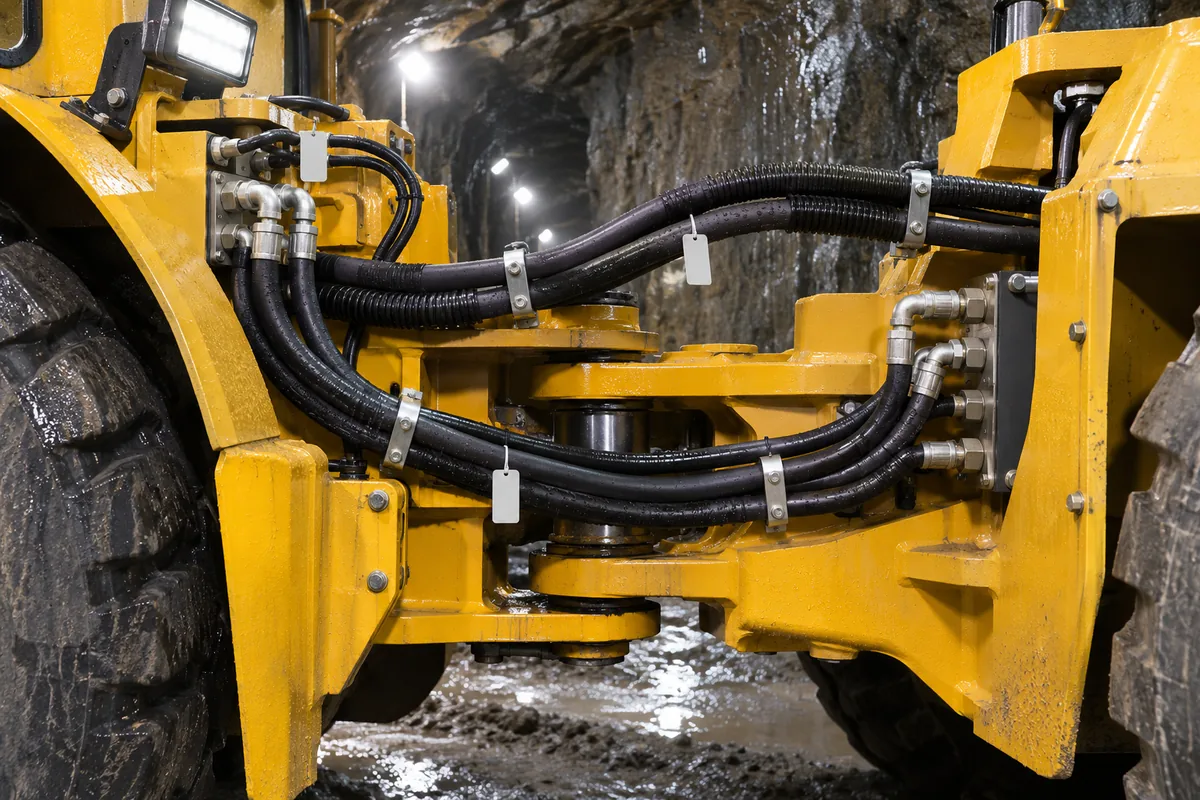
Underground loaders (LHDs). Articulation steering, bucket tilt and lift, brake and cooling circuits. The articulation joint is an important inspection point: hoses bend through a wide angle at every turn and can be pinched or scraped against the frame or the rib. Length, clamp positions and protection need to accommodate the full articulation movement without pinching or rubbing.
Development jumbos. Boom lift, swing and extension, feed and rotation on each boom, plus water flushing. Boom hoses flex continuously, and the feed lines see high-frequency impact from the rock drill. Hoses are often routed through tight carriers, so we confirm bend radius and outside diameter before quoting.
Rock bolters and cable bolters. Boom, feed and bolting-head circuits, often with many small hoses in a confined space. Tagging by position saves real time at change-out.
Support machines. Charging units, scaling machines, utility vehicles and underground water carts, plus pump and dewatering lines.
Underground duty and how we specify for it
- Fire risk. Fire-resistant (MSHA-type) cover hose available on request for positions near hot surfaces or where your site rules require it. We state the cover type in the quotation and do not claim an MSHA approval held by RHPL.
- Abrasion against rock. Abrasion-resistant covers and sleeves at points where hoses rub the frame or brush the rib.
- Water and heat. Underground workings are wet and warm; we check the temperature rating near engines and power packs and suggest corrosion-resistant fittings (zinc-nickel plated or stainless steel, on request) where water attacks plated steel.
- Compact fittings. Staple-lock, ORFS and metric DIN fittings are common on underground equipment. We confirm each fitting from photos or samples.
- Identification. Every assembly carries a traceable tag referenced on the kit list, so a fitter can match a hose to its position quickly, even in poor light.
Building a kit for an underground fleet
- Send each machine's make, model and serial number, plus attachments such as boom type or bucket size.
- Send photos of the articulation, boom and feed hose runs, and any old tags.
- We build a position list by circuit and mark the positions we suggest as critical spares.
- You approve the list; we build, pressure-test, cap and tag each assembly.
You can send references for underground machines from makers such as Sandvik, Epiroc and Caterpillar, among others. Aftermarket assemblies built to the confirmed reference. Not OEM-genuine parts; no OEM approval is claimed.
Questions before an enquiry
Useful answers.
Is fire-resistant hose available for underground machines?
Yes. Fire-resistant (MSHA-type) cover hose is available on request. We state the cover type; RHPL does not claim to hold an MSHA approval. Your site's own rules decide where it is required.
Which LHD hoses deserve close inspection?
[INF] Check articulation steering and brake lines and the bucket and lift lines near the front frame for pinching, rubbing and inadequate clearance. Use your maintenance history to select critical spares; this is not a measured failure ranking.
Can you supply staple-lock fittings?
Yes, staple-lock fittings are part of our range, alongside ORFS, JIC and metric DIN. We confirm each fitting from photos or a sample.
Can an underground contractor in Ghana order directly?
Contractors can enquire directly where applicable procurement rules and their contract permit. Check the current Minerals Commission list for mining-linked purchases; we also quote qualifying Ghana-incorporated suppliers.
You supply Ghana's mines